



The United States and Israel began strikes on Iran, initiating a new conflict that President Donald Trump claimed would address security issues for the U. S. and possibly enable Iranians to remove their leaders. In response, Iran fired missiles at Israel, prompting concerns over Iran’s missile capabilities.
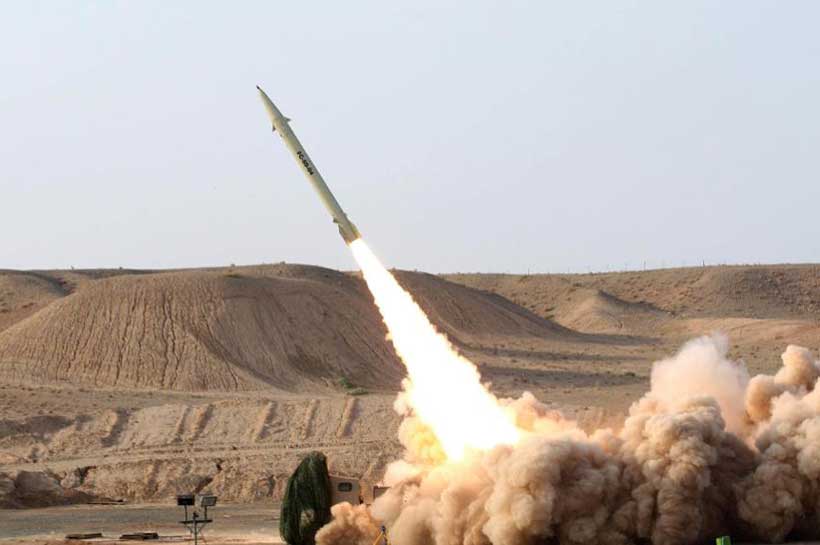
Ballistic missiles, which Iran possesses in significant numbers, are guided during launch and then fall freely for most of their flight. They can carry various warheads, including explosives or potentially nuclear materials, which Western nations view as a threat to Middle Eastern stability. Iran insists it has no plans to develop nuclear weapons.
According to U. S. intelligence, Iran holds the largest ballistic missile stockpile in the Middle East, with missiles that can travel up to 2,000 kilometers (1,240 miles), effectively reaching Israel. Key missile sites are located in and near Tehran, and there are several underground missile facilities across the country. Various long-range missiles within Iran’s arsenal include the Sejil, Emad, Ghadr, Shahab-3, Khorramshahr, and Hoveyzeh, with ranges spanning from 1,300 to 2,500 kilometers.
Historically, Iran has used its missiles in conflicts, including during a 12-day war with Israel in June 2025, where missile strikes resulted in casualties and damage. Reports indicate that Israel managed to destroy a significant portion of Iran’s missile launchers during this conflict. Iran also targeted U. S. bases in response to American involvement in the aerial conflicts.
Iran’s missile strategy aims to provide deterrence against potential attacks from the U. S. and Israel. The country is actively developing its missile capabilities, including underground facilities for deployment. Recent advancements include the development of domestic hypersonic missiles, which are harder to intercept due to their high speeds and complex flight paths. Iran’s missile program relies on technology and designs sourced from North Korea, Russia, and China.
Iran also possesses cruise missiles that can carry nuclear weapons, with ranges that extend up to 3,000 kilometers, showcasing the breadth and depth of its missile capabilities.
With information from Reuters
