



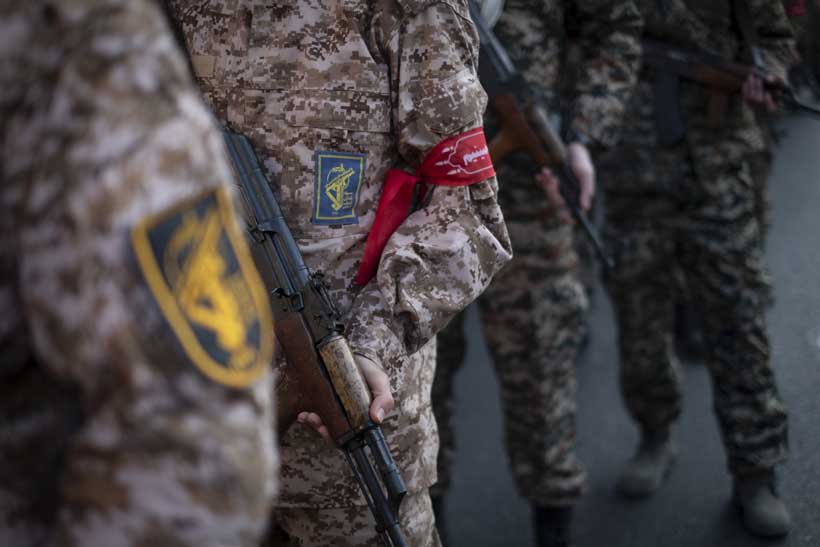
Iran’s Revolutionary Guards launched missile and drone attacks against U.S. military installations in Jordan, Kuwait, and Bahrain after President Donald Trump ordered strikes on Iranian military assets near the Strait of Hormuz. According to Iranian media, more than 20 targets across the Gulf region were targeted in what Tehran described as retaliation for American operations against Iranian air defence systems, radar installations, and command infrastructure.
The latest escalation follows the reported downing of a U.S. Apache helicopter near the Strait of Hormuz, an incident Washington attributed to an Iranian drone attack. While Trump downplayed the helicopter loss, describing it as “not a big deal” because the crew survived, the episode prompted a significant U.S. military response.
The confrontation represents one of the most serious exchanges between the United States and Iran since the fragile ceasefire reached in April. The broader conflict began on February 28 following joint U.S. and Israeli strikes against Iran, triggering a regional crisis that has involved attacks on Gulf states hosting American forces and severe disruptions to maritime traffic through the Strait of Hormuz.
Jordan reported intercepting Iranian missiles aimed at the al Azraq air base, while Bahrain and Kuwait activated air defence systems to counter incoming drones and missiles. Initial U.S. assessments indicated that most of the projectiles were intercepted and that no American casualties had been reported.
Why It Matters
The latest exchange underscores how rapidly the Gulf conflict could expand despite ongoing diplomatic efforts. By directly targeting U.S. military facilities across multiple countries, Iran has demonstrated its willingness to broaden the battlefield beyond its own territory and challenge Washington’s regional military footprint.
The attacks also raise concerns about the security of key U.S. allies in the Middle East. Jordan, Bahrain, and Kuwait have become increasingly exposed to the risks associated with the U.S. Iran confrontation because of their strategic partnerships with Washington and their role in hosting American military assets.
Perhaps most importantly, the escalation threatens global energy security. The Strait of Hormuz remains one of the world’s most critical energy corridors, historically carrying roughly one fifth of global oil and liquefied natural gas shipments. Continued military activity around the waterway increases the risk of supply disruptions, shipping delays, and higher energy prices, with oil already rising following news of the attacks.
The renewed violence also complicates efforts to negotiate a broader settlement. Trump has repeatedly suggested that Washington and Tehran are close to a deal, but the exchange of strikes highlights the deep mistrust that continues to undermine diplomatic progress.
Future Outlook
The immediate focus will be on whether the United States chooses to respond militarily to Iran’s latest attacks. If Washington concludes that Iranian strikes caused significant damage or posed a direct threat to American personnel, additional military operations could follow, increasing the risk of a wider regional conflict.
Iran, meanwhile, has signalled that it is prepared to escalate further if U.S. attacks continue. The Revolutionary Guards’ warning of a “crushing and decisive” response suggests that Tehran intends to maintain pressure on American forces and regional partners.
Diplomatic efforts are likely to continue behind the scenes, particularly as Gulf states seek to prevent the conflict from spilling further into their territories. However, negotiations face significant obstacles, including disagreements over sanctions relief, Iran’s regional influence, control of maritime routes, and Washington’s demand that Tehran permanently abandon any pathway to nuclear weapons.
The future of the Strait of Hormuz will remain a key indicator of whether tensions are easing or worsening. Any sustained disruption to shipping could have consequences far beyond the Middle East, affecting global energy markets, inflation trends, and economic growth worldwide.
For now, the conflict appears caught between diplomacy and escalation, with both sides signalling a willingness to negotiate while simultaneously demonstrating their military capabilities.
With information from Reuters.
